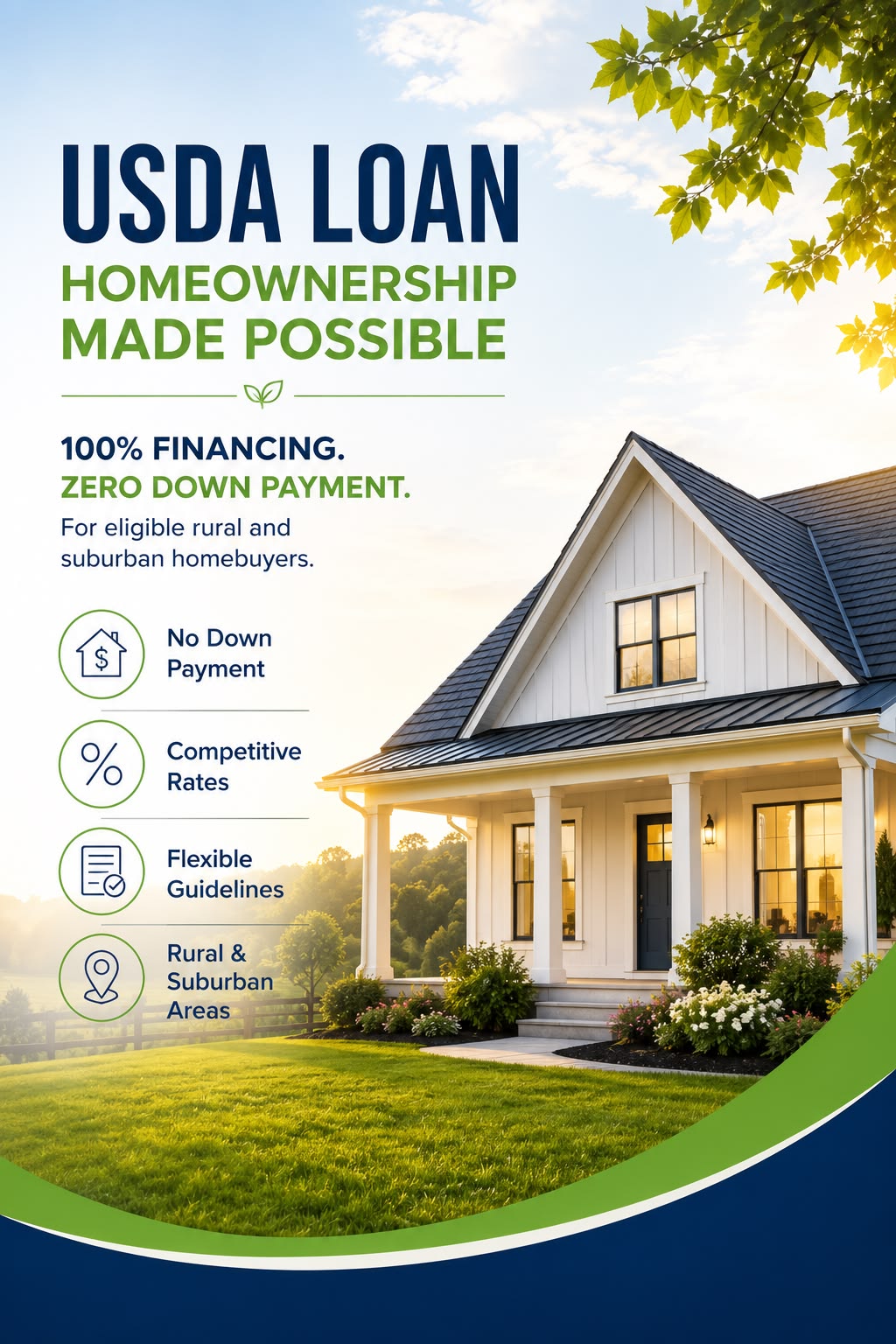
One of the most underused mortgage programs in Texas is the USDA loan. Buyers hear "rural" and assume it doesn't apply to them. In reality, USDA-eligible areas extend well into the outskirts of major Texas metros — including communities most people would describe as suburban, not rural. If you're buying in a growing North Texas community, your address might already qualify.
For the full list of DFW cities that still qualify for USDA loans in 2026, see my USDA eligible cities guide for DFW — I've mapped every eligible zone by county so you can check your target area before making an offer.
What the USDA Loan Offers
USDA loans are guaranteed by the U.S. Department of Agriculture's Rural Development program. The benefits for qualified borrowers in eligible Texas communities are significant:
- Up to 100% financing — no down payment required for qualified buyers.
- Affordable monthly payments with competitive interest rates.
- Lower guarantee fees than FHA mortgage insurance in many cases.
- Flexible credit guidelines for the right borrower profile.
Two Eligibility Checks
USDA has two eligibility tests you need to pass: property eligibility (is the address in a qualifying area?) and income eligibility (is your household income within the program's limits?).
Property eligibility. USDA maintains an official map of eligible addresses. Many areas around Royse City, Forney, parts of Rockwall County, and outer Frisco/McKinney have historically been eligible. The boundaries shift over time as communities grow and the USDA reviews areas. I always check the current map myself for the specific address you're considering — assumptions based on memory of last year's map are how deals get derailed late in the process.
Income eligibility. USDA sets income limits that vary by county and household size. The limits are reasonable — they're not designed only for low-income buyers. Many middle-income Texas households qualify comfortably.
What Kind of Home Qualifies
USDA loans are for primary residences only, and the home has to be in good condition. New construction works. Existing single-family homes and townhomes in eligible areas work. Manufactured homes can work in some cases. Investment properties and second homes don't.
Why Buyers Choose USDA Over Other Programs
When a buyer is eligible for both USDA and FHA, USDA usually wins on overall cost — the guarantee fee structure is friendlier, and the no-down-payment option preserves cash for moving and reserves. When a buyer is eligible for both USDA and VA, VA usually wins for the Veteran (no funding fee waiver requirements, no income cap). For non-Veterans buying in eligible areas, USDA is often the strongest program available.
Common Texas Communities Worth Checking
I've helped buyers use USDA financing in or near:
- Royse City and parts of Rockwall County
- Forney and other parts of Kaufman County
- Outer edges of Frisco, McKinney, and other DFW exurbs
- Smaller communities throughout North and East Texas
The only way to know for sure is to check the address. Send me the address you're considering and I'll verify property eligibility and run your income against the limits.
Get Your Address Checked
Before you write an offer on a property that might qualify for USDA, read more about the program or send me the address. I'll confirm in writing whether USDA financing is available and run a quick scenario so you can compare it to your other options.
Frequently Asked Questions
What areas in Texas qualify for a USDA loan?
USDA-eligible areas in Texas extend well beyond rural farmland. Many growing DFW communities — including parts of Royse City, Forney, Rockwall County, and outer areas near Frisco, McKinney, and Denton — have historically qualified. The USDA maintains an official property eligibility map that is updated periodically. The only reliable way to confirm eligibility is to check the specific address against the current map.
What is the income limit for a USDA loan in Texas?
USDA income limits in Texas vary by county and household size, set at 115% of the area median income (AMI) for your specific county. They're not designed exclusively for low-income buyers — many middle-income Texas households qualify comfortably. A family of four in a DFW county may have a limit well above $100,000 per year. Your lender can check your household income and size against the current published limits for the county you're buying in.
Can I get a USDA loan with bad credit in Texas?
USDA loans have flexible credit guidelines, but most lenders prefer a minimum credit score of 620 to 640 for automated underwriting approval. Borrowers with lower scores may still qualify through manual underwriting, which evaluates the full picture of your credit history rather than just the score. If your score is below 620, it's worth having a lender review your complete file — there are often targeted steps that can move your score into a qualifying range within 30 to 60 days.
Ready to take the next step?
Talk to me about your specific situation. I'll run real numbers — no estimates, no industry-speak — and tell you straight what fits. Text or call me at 469-545-7180, message me on WhatsApp, or fill out my contact form.